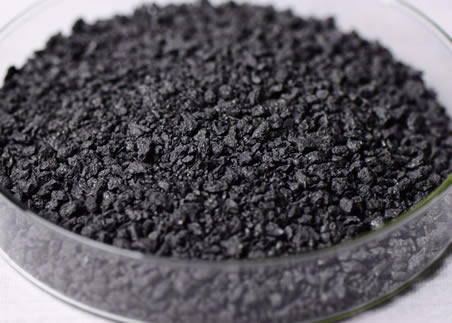

Graphite material is the most widely used friction pair material with the widest range of applications. It has the following characteristics:
(1) Good corrosion resistance.
(2) Has good temperature resistance.
(3) Good thermal conductivity and low coefficient of linear expansion.
(4) Good pairing performance.

(5) Easy to process. The graphite materials used in mechanical seals are roughly divided into the following categories. Roasted graphite. When graphite is roasted, due to the volatilization of substances in the binder and the polymerization, decomposition, and carbonization of the binder, pores (with 10% to 30% pores) appear. As a sealing ring, permeability leakage occurs and its strength is low. Therefore, it needs to be impregnated to fill the gaps and enhance the strength. After impregnation, it becomes an impermeable product, and the strength is also improved. However, both temperature resistance and corrosion resistance have decreased to varying degrees. There are three main types of impregnates used: organic resins, inorganic substances, and metals. Resin bonded graphite. It is to crush the sintered graphite, use phenolic resin or epoxy resin as a binder, mix it, and then press and sinter it into a product. After sintering, the resin in the matrix becomes carbon particles, making it breathable graphite. It has poor thermal conductivity and a large coefficient of linear expansion, making it suitable for mass production. Low cost, mainly used for low load sealing of automotive cooling water pumps, household appliances, etc